Business Waste Removal Croydon — Health & Safety Policy
 This Health and Safety policy sets out the standards and procedures for Business Waste Removal Croydon operations, applying across our commercial waste collection and rubbish removal services. It is designed to protect employees, contractors, visitors and the public while ensuring that waste management activities are carried out safely and efficiently. The policy is applicable to all sites within our service area and to all operational tasks, including collection, transfer and storage of commercial waste.
Our rubbish removal Croydon teams are trained to recognise hazards, follow safe systems of work and use the appropriate personal protective equipment. Managers will ensure that risk assessments are conducted for routine and non-routine tasks and that findings are communicated to staff. We emphasise that safety is a core part of every job and that reporting of near-misses or unsafe conditions is actively encouraged.
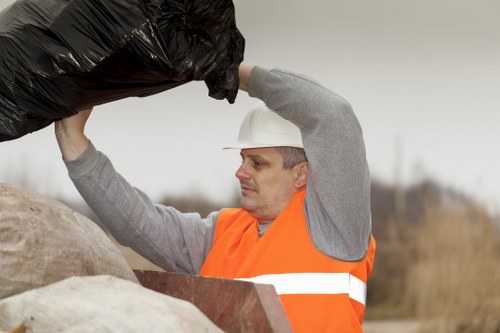 In addition to routine assessments, we implement a permit-to-work approach for high-risk operations such as manoeuvring bulky loads, confined space access around skips, and handling hazardous materials. Operational controls include vehicle safety checks, secure load protocols, correct manual handling techniques and the segregation of hazardous items at source where possible to minimise exposure.
Roles, Responsibilities and Training
Senior leadership holds ultimate responsibility for health and safety and will allocate sufficient resources to maintain standards. Supervisors and team leaders are responsible for day-to-day safe operation. Employees must follow procedures, use provided safety equipment and participate in health and safety briefings. Training is ongoing and tailored to job roles, including induction training, refresher courses and specialist instruction for mechanical handling or hazardous waste handling.
We maintain documented competency records and ensure that all drivers and crew working in commercial waste collection Croydon roles understand vehicle stability, load securing and traffic management on site. Emergency response training covers spill control, first aid and vehicle incident procedures so teams are prepared to act promptly and safely.
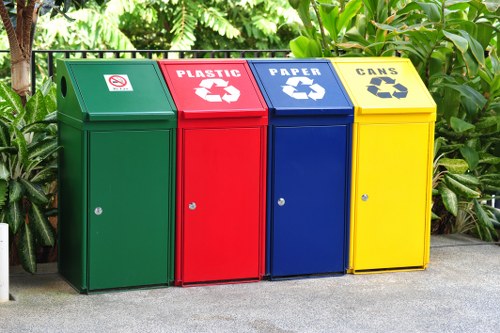 Inspections and audits are carried out regularly to verify compliance with policy requirements and to identify opportunities for improvement. Corrective actions are tracked and closed out in a timely manner. Where contractors operate on our behalf, their safety arrangements are reviewed to ensure alignment with our expectations and industry best practice.
Risk Management and Safe Working Practices
Risk assessments consider physical hazards such as slips, trips and falls, manual handling risks from bulky rubbish items, vehicle movements, and the potential presence of sharp or contaminated waste. Controls include clear walkways, mechanical aids, high-visibility clothing and strict segregation of sharps or chemical waste. We require staff to follow lock-out/tag-out procedures when servicing equipment and to observe exclusion zones during on-site collections.
Preventive maintenance of vehicles and equipment reduces the likelihood of failures that could cause harm. Incident investigation is systematic: incidents are recorded, investigated to identify root causes, and lessons learned are shared with the workforce. Continuous improvement is driven by data from incident trends and safety observations.
We use a proactive approach to occupational health, addressing risks such as noise, vibration, and manual handling. Occupational health surveillance is available for roles with specific exposures, and wellbeing initiatives support employees in managing stress, fatigue and musculoskeletal strain.
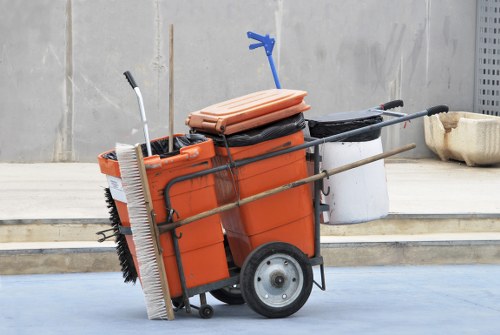 Waste classification and handling procedures ensure materials are transported and stored in line with environmental and safety obligations. Where hazardous items are encountered, crews are trained to isolate and report them to prevent cross-contamination. Our work processes prioritise minimising manual contact with potentially dangerous materials.
Safe systems of work are documented and include toolbox talks, site-specific risk briefings and clear escalation routes for safety concerns. Employees are empowered to stop work if they identify an immediate danger. Accountability is supported by clear supervision and consistent enforcement of rules to protect everyone on site.
 Key controls for our rubbish company service area include:
- Regular and documented risk assessments for all routine and non-routine tasks
- Appropriate PPE and training for manual handling, vehicle operations and hazardous material awareness
- Vehicle inspections and load securement checks before every shift
- Incident reporting, investigation and corrective action tracking
- Contractor management and verification of competence for third-party providers
Compliance with this policy is monitored through audits and performance indicators such as incident frequency, near-miss reports and corrective action closure times. We review the policy annually and after any significant change in operations to ensure alignment with evolving risks and standards.
Conclusion: Our commitment to health and safety underpins every aspect of business waste removal in the service area. By integrating safe work practices, training, effective supervision and continuous improvement, we aim to provide reliable commercial waste collection and rubbish removal services while preserving the health of our workforce and the safety of the public.
