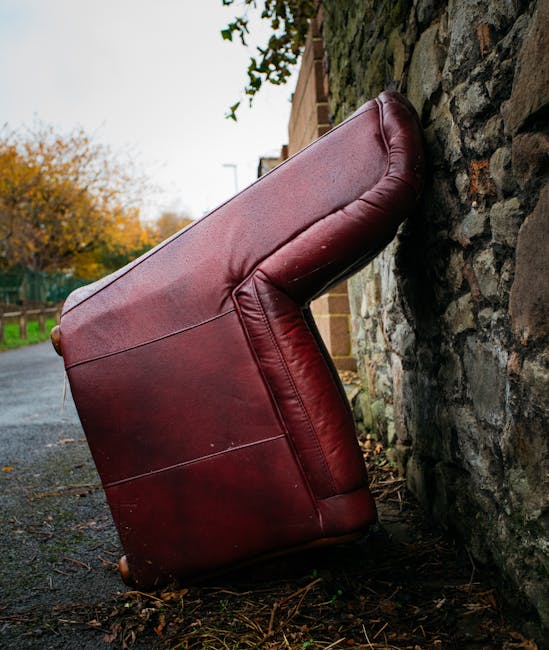
Addiscombe Bulky Rubbish Removal for Tight Access Properties
If you live in Addiscombe and need bulky rubbish removal for a property with tight access, you already know the problem is rarely the waste itself. It is the doorway, the hallway, the narrow side passage, the awkward stairs, the parked cars, the shared entrance, the low gate, the turn at the bottom of the steps. All the little things that make a simple clearance feel, well, a bit of a faff.
The good news is that bulky item clearance can still be straightforward if the right approach is used. With a bit of planning, sensible lifting, and an understanding of what can realistically be moved through narrow access, you can clear old furniture, white goods, mattresses, and mixed bulky waste without turning your home into a construction site. This guide explains how Addiscombe bulky rubbish removal for tight access properties works, what to expect, and how to avoid the common headaches that slow people down.
Whether you are clearing a flat, a terraced house, a converted property, or a home with a shared entrance, you will find practical advice here. And, to be fair, some of the best clearance jobs are the ones that look impossible at first glance.
Why Addiscombe bulky rubbish removal for tight access properties Matters
Tight access changes everything. A sofa that would be easy to move from a detached house can become a two-person puzzle in a top-floor flat with a narrow stairwell. A wardrobe that seems manageable in the living room may need careful dismantling before it will even clear the first turn. And if you have ever tried to angle a fridge through a corridor barely wider than the appliance itself, you will know the feeling: you are three seconds from "this should work" and then suddenly you are absolutely certain it will not.
In Addiscombe, many homes and smaller commercial spaces sit on streets where parking, front-garden layouts, shared access, and older property design can make bulky waste removal trickier than expected. That matters for two reasons. First, it affects the safety of the people doing the lifting. Second, it affects the time and method needed to complete the job properly.
Planning matters because bulky items are not just heavy; they are often awkward, brittle, sharp-edged, or unstable. A mattress can bend in the wrong place, a dining table can catch on a bannister, and broken furniture can shed screws or splinters as it moves. Tight access properties need a more thoughtful removal plan than a standard curbside collection.
Done well, the job is calm, tidy, and efficient. Done badly, you end up with scratched walls, strained backs, and an unsightly pile of waste blocking a hallway. Not ideal, obviously.
How Addiscombe bulky rubbish removal for tight access properties Works
The process usually starts with an access check. That may be as simple as a short phone conversation or a quick set of photos showing the doorway, stairs, side alley, lift, courtyard, or rear gate. For tight access properties, these details are not a nicety; they are the whole game.
Once the access route is understood, the clearance team can decide whether items can be removed whole, partially dismantled, or taken out in smaller sections. In some cases, items are carried through a building exactly as they are. In others, they are broken down on site to avoid damage to the property. This is common with wardrobes, beds, office desks, and some flat-pack furniture that has long since reached the end of its useful life.
There is often also a sorting stage. Mixed bulky waste may include reusable items, recycling streams, and materials that need separate handling. If you are also clearing a garage, loft, or home interior, a broader service such as home clearance or house clearance can sometimes be the cleaner way to handle the job, especially when access is tight and the waste is spread across more than one room.
The physical removal itself is usually done in stages. Items are moved one at a time, with careful control at corners, stair landings, and pinch points. If parking access is limited, the team may need to shuttle items to a vehicle or hand-load them from the property. That sounds simple, but it can take a surprising amount of coordination. Timing, foot traffic, and neighbours all matter.
For items like broken fridges, washing machines, or old cookers, specialist handling may be needed. If your bulky rubbish includes appliances, see the relevant fridge and appliance removal service. If the waste includes a mattress or sofa, those pieces often need a slightly different approach too, especially in narrow stairwells, which is why mattress and sofa disposal can be useful to understand in advance.
For some properties, particularly flats and converted buildings, access is the bottleneck rather than the amount of waste. That is where a focused flat clearance approach tends to be more efficient than a general all-purpose collection.
Key Benefits and Practical Advantages
There is a reason people choose a professional bulky rubbish removal service instead of trying to wrestle items out themselves. In tight access properties, the benefits are not just convenience. They are practical, measurable, and often a relief to everyone involved.
- Less damage risk: Careful handling reduces scuffed walls, dented banisters, chipped plaster, and broken door frames.
- Safer lifting: Heavy and awkward items are easier to move with proper technique and enough people.
- Better use of space: Small hallways and narrow stairs are easier to manage when items are planned out in the right order.
- Time saved: A structured clearance avoids the stop-start frustration of trying and failing to fit something through a gap.
- Cleaner finish: A tidy removal process leaves less debris, packaging, and dust behind.
- Useful for mixed items: Furniture, white goods, garden clutter, and builders' leftovers can often be handled in one visit.
Another advantage is certainty. If you have to coordinate parking, stairwell access, and a collection time around neighbours, tenants, or building managers, having a clear plan removes a lot of stress. Not all waste jobs are complicated, but tight access ones often are. That is just the truth of it.
Where sustainability matters, it is worth using a service that thinks beyond simple disposal. Mixed bulky waste can often be separated for recycling, and reusable items may be directed away from disposal where appropriate. For readers who want to understand this side of the process better, the company's recycling and sustainability page is a useful companion read.
Who This Is For and When It Makes Sense
This kind of service is a strong fit for people who are short on access, short on time, or both.
You may need it if you live in a terraced home with a narrow hallway, a first-floor or upper-floor flat with awkward stairs, a converted property with a shared entrance, a mews-style layout, or a home with limited front or rear loading space. It also makes sense if your bulky waste includes more than one item, or if the items are too heavy to safely handle without help.
It is especially useful when:
- you are moving out and need a fast clear-out before handover;
- you have inherited a property with old furniture to remove;
- you are replacing a room of old items in one go;
- you have items in a loft, garage, or basement that are difficult to shift;
- the waste includes awkward pieces that do not fit standard collection rules;
- you need more flexibility than a skip can offer.
For homeowners, landlords, letting agents, and small businesses, the commercial side matters too. Office furniture, storage units, and bulky back-room clutter can be handled through a suitable office clearance or, where relevant, business waste removal arrangement. Sometimes the most sensible choice is not the most obvious one.
If your access problem is in a storage area or outbuilding, related services like garage clearance or loft clearance can also be helpful, because access constraints in those spaces are often similar: low headroom, awkward angles, and a lot of "how did all this get up here?"
Step-by-Step Guidance
If you want the smoothest possible result, a little preparation goes a long way. Here is the practical sequence that tends to work best.
- List the items clearly. Make a simple list of what needs removing, including approximate size and whether the items are one piece or can be dismantled.
- Check the access route. Measure doorways, stair widths, landings, gates, and any sharp turns. Even rough measurements help.
- Take a few photos. A couple of pictures of the main obstacles can save a lot of guesswork. A dark hall at 7am looks different from the same hall in daylight, too.
- Identify anything special. Appliances, glass, confidential waste, or potentially hazardous items should be flagged early. If hazardous waste is involved, use a dedicated approach and do not leave it mixed in with general rubbish.
- Clear the route. Move shoes, plant pots, bins, fragile ornaments, and anything else that could be knocked over.
- Decide what stays and what goes. This sounds obvious, but it avoids those awkward moments where someone points at the wrong sofa halfway through the job.
- Prepare parking and timing. If the street is busy, the team may need a specific arrival window to avoid blockages or permit issues.
- Ask about dismantling. A wardrobe, bunk bed, or bulky desk may need partial strip-down before it can be carried safely.
- Keep pets and children away from the route. It is safer and faster for everyone.
- Do a final walkthrough. Before the vehicle leaves, check the spaces behind large items, under tables, and inside cupboards.
A small but useful habit: leave the items in a single, visible area if possible. Even shifting things two metres closer to the exit can cut time and reduce handling. That bit alone can make the whole job feel less like an obstacle course.
Expert Tips for Better Results
In our experience, the best bulky rubbish removals are not the ones with the biggest team. They are the ones with the clearest plan. A few small decisions can make a very real difference.
Tip 1: Photograph the narrowest point, not just the item. People often send a picture of the sofa, but the issue is usually the doorway, stair bend, or gate. Show the pinch point. That is where the answer lives.
Tip 2: Keep dismantling screws and fittings in a labelled bag. If you are taking a bed frame or wardrobe apart, a basic sandwich bag and a marker pen can save a lot of future irritation. Ask me how people lose those little hex keys. Everywhere, apparently.
Tip 3: Don't underestimate surface protection. Thin blankets, corner guards, and floor protection can reduce wear on paintwork and flooring. In older Addiscombe homes, hallways can be narrow enough that every inch counts.
Tip 4: Separate obvious recyclables early. Cardboard, metal components, and some timber can often be sorted more efficiently if you identify them before collection day.
Tip 5: If access is extremely tight, choose smaller loads. Sometimes two lighter visits are better than one overstuffed attempt. It is not glamorous, but it works.
If you are comparing wider clearance options, pages such as furniture clearance and furniture disposal can help you judge whether your items are better handled as part of a grouped load or a more focused collection.
Common Mistakes to Avoid
Tight access jobs usually go wrong for predictable reasons. The good news? Most of them are avoidable.
- Not measuring properly: Guessing the size of a doorway or stair turn is a classic error. "It should fit" is not the same as "it does fit."
- Forgetting about the exit path: A sofa may leave the room but get stuck on the landing. Always check the whole route.
- Mixing hazardous and general waste: Certain items need careful handling and should not be thrown in with ordinary bulky rubbish.
- Leaving everything until collection day: A cluttered route slows the process and increases the chance of damage.
- Assuming all items can be removed whole: Some pieces need dismantling first. That is normal, not a failure.
- Ignoring parking reality: If the vehicle cannot get close enough, the whole job becomes harder than it needs to be.
A quieter mistake is under-communicating. If there is a low archway, a tight corner, or a neighbour whose driveway cannot be blocked, say so early. It is far better to mention the awkward bit upfront than to have someone discover it with a mattress halfway through the staircase. That never ends well.
Tools, Resources and Recommendations
You do not need a warehouse of equipment to handle bulky rubbish removal well, but a few practical tools help a lot.
- Tape measure: Useful for door widths, stair turns, and the length of bulky items.
- Work gloves: Helpful for grip and for avoiding splinters, rough edges, and grime.
- Blankets or wraps: Good for protecting walls and item surfaces during careful manoeuvring.
- Basic screwdriver or hex key set: Useful for dismantling furniture where needed.
- Strong bags or boxes: Handy for loose hardware, smaller parts, and mixed accessories.
- Phone camera: Simple but very effective for sharing access details and route photos.
For many people, the most useful "resource" is knowing which service matches the job. If the clearance includes builders' leftovers, the dedicated builders waste clearance service may be the better fit. If the job is more about clearing a whole room or home, a broader clearance option may be simpler.
You may also want to review practical pages such as what can go in a skip if you are weighing up whether a skip or a collection service is the better option. In tight access properties, a skip is not always the neatest answer, especially if loading space is limited or roadside placement is awkward.
Law, Compliance, Standards, or Best Practice
For bulky rubbish removal in the UK, the broad principle is simple: waste should be handled safely, responsibly, and in a way that does not create nuisance or risk. For households, that means making sure items are not fly-tipped, left obstructing public access, or handed to people who cannot lawfully carry them away. For businesses, there is usually more duty of care involved, so records, segregation, and proper handling become even more important.
If a property contains items that may be hazardous, damaged in a way that creates risk, or contaminated by food, liquid, mould, or chemicals, take extra care. Do not mix risky materials with ordinary bulky rubbish unless you are certain they can be managed safely. That is one area where caution is better than speed.
Insurance and safe working practice matter too. A clearance team should think about lifting technique, route safety, property protection, and any shared building rules. If you want a clearer sense of the company's approach to this side of the work, the insurance and safety and health and safety policy pages are worth a look.
Best practice also includes transparency around costs, secure payment handling, and clear service terms. You can review pricing and quotes, payment and security, and the terms and conditions if you want to understand the practical side before booking. That kind of clarity is reassuring. It should be.
Options, Methods, or Comparison Table
Choosing the right method depends on the type of waste, the access route, and how quickly you need the space cleared.
| Method | Best for | Strengths | Watch-outs |
|---|---|---|---|
| Bulky rubbish removal collection | Single items or mixed bulky waste from tight-access homes | Flexible, hands-on, less disruption, easier with awkward access | May need access details and some preparation |
| Skip hire | Projects with enough space for drop-off and loading | Good for ongoing filling over time | Can be awkward where parking or frontage is limited |
| Room or property clearance | Whole rooms, flats, houses, or larger mixed clear-outs | Efficient for bigger jobs, more comprehensive | May be more than you need for a few bulky items |
| Item-specific disposal | Appliances, sofas, mattresses, or specialised pieces | Useful when the item needs special handling | Less flexible for mixed loads unless combined with another service |
In a tight access Addiscombe property, removal collection often wins because it adapts to the route you actually have, not the route you wish you had. That is the difference, really.
Case Study or Real-World Example
A typical real-world scenario might look like this. A resident in a converted Addiscombe property needs a sofa, a broken desk, two wardrobes, and an old appliance removed from a first-floor flat. The staircase is narrow, the landing is small, and the front access is shared. There is also a tight parking window because the street gets busy by late morning.
Instead of trying to move everything in one rush, the removal is planned in the order that makes sense: appliance first, then the dismantled wardrobes, then the sofa once a clear path has been created. Protective coverings are used on the stair corners, the item that needs dismantling is broken down safely on site, and the smaller parts are carried separately. The whole job takes more time than a simple ground-floor collection, but the property stays tidy and the access route is never blocked for long.
That is the kind of job where planning saves the day. Not dramatic, maybe, but absolutely effective. And for the person living there, it feels like a genuine load off.
Practical Checklist
Use this quick checklist before booking Addiscombe bulky rubbish removal for tight access properties:
- List every item that needs removing.
- Measure doors, stairs, gates, and the tightest turns.
- Take clear photos of the access route.
- Identify anything that needs special handling.
- Clear the route of loose objects and trip hazards.
- Decide whether items can be dismantled beforehand.
- Check parking, neighbour access, and arrival timing.
- Separate anything reusable, recyclable, or confidential.
- Confirm whether the load is bulky waste, furniture, appliances, or a broader clearance.
- Do one final sweep before the team arrives.
Key takeaway: the tighter the access, the more the success depends on preparation. The actual lifting is only half the job. The other half is route planning, communication, and not trying to force a bulky item through a space it plainly dislikes.
Conclusion
Addiscombe bulky rubbish removal for tight access properties is all about matching the method to the building. If your home has narrow stairs, a compact hallway, a shared entrance, or limited parking, the right clearance plan can save time, reduce stress, and protect the property from avoidable damage.
The most useful approach is usually the simplest one: identify the items, check the access, choose the right service, and prepare the route. Do that, and even a difficult clearance starts to feel manageable. Sometimes it really is just about taking the job one measured step at a time.
Get a free quote today and see how much you can save.
When the clutter is finally gone and the hallway feels open again, the whole place can breathe a bit easier. That, more than anything, is what people are usually after.
Frequently Asked Questions
What counts as bulky rubbish in a tight access property?
Bulky rubbish usually means large items that are awkward to move, such as sofas, wardrobes, beds, mattresses, cabinets, desks, and large appliances. In tight access properties, even items that are not especially heavy can count as bulky if they are hard to turn or carry through narrow spaces.
Do I need to dismantle furniture before collection?
Not always. Many items can be dismantled by the clearance team if needed. That said, taking apart a wardrobe or bed frame in advance can make the process faster, especially where stairwells or hallways are very narrow.
Is bulky rubbish removal better than skip hire for tight access homes?
Often yes, because bulky rubbish removal is more flexible and does not rely on finding space for a skip outside the property. In a tight access setting, that flexibility can make a big difference.
Can you remove items from flats with narrow stairs?
Yes, provided the access route can be used safely. Flats are a common reason people look for specialist bulky item removal, especially where stairs, landings, and shared entrances create a logistical puzzle.
What should I measure before booking?
Measure the narrowest doorways, stair widths, landing corners, gates, and any turns where a large item might catch. Even rough measurements are helpful. A photo of the route is often just as useful.
What if my sofa or wardrobe will not fit through the door?
It may need to be dismantled, carried out in sections, or removed using an alternative route. Sometimes the item can be taken apart on site without causing damage, which is common with larger furniture.
Can appliances be taken away with other bulky waste?
Usually yes, but appliances are best flagged early because they may need separate handling. If you have fridges, washing machines, or other white goods, check the relevant removal option before collection day.
How do I prepare a property with very limited access?
Clear the route, move fragile items away from the path, keep children and pets clear, and make sure access points are unlocked and ready. If parking or building entry is unusual, mention it before the appointment.
Is bulky rubbish removal safe for older buildings?
It can be, as long as the route is assessed and items are handled carefully. Older properties often have tighter corners, steeper stairs, and more delicate finishes, so good planning matters even more.
What happens if some items are recyclable and others are not?
They are usually sorted so recyclable materials can be handled appropriately and general waste goes in the right stream. Mixed loads are common, and careful sorting is part of a good service.
Can landlords or letting agents use this service for end-of-tenancy clearances?
Yes. It is a sensible option when a property needs to be turned around quickly and access is awkward. A focused clearance can help restore the space without delaying the next stage of the tenancy.
How far in advance should I arrange the collection?
As early as you can, especially if access is tight or the property is in a busy street. A little notice gives the team time to plan the route and avoid unnecessary complications.
If you want to review the company background or service approach before booking, you can also read the about us page or check the accessibility statement for site and service information.